
Disclosure: this page contains affiliate links for travel services (not hospitals). We may earn a commission at no extra cost to you.
By KMedTrip editorial · Updated · Written with AI assistance · Reviewed by KMedTrip native-speaker review team
This guide is general information, not medical advice. KMedTrip is run by a government-registered foreign patient facilitator (an agency that helps international patients arrange medical care). We do not recommend, rank or receive payment from any hospital or clinic.
How long should a medical trip to Korea be? It depends on three things:
The examples below show how people often plan a 1-week or 2-week stay. They are planning templates, not medical schedules. Your treating doctor’s timeline always comes first.
Key takeaways
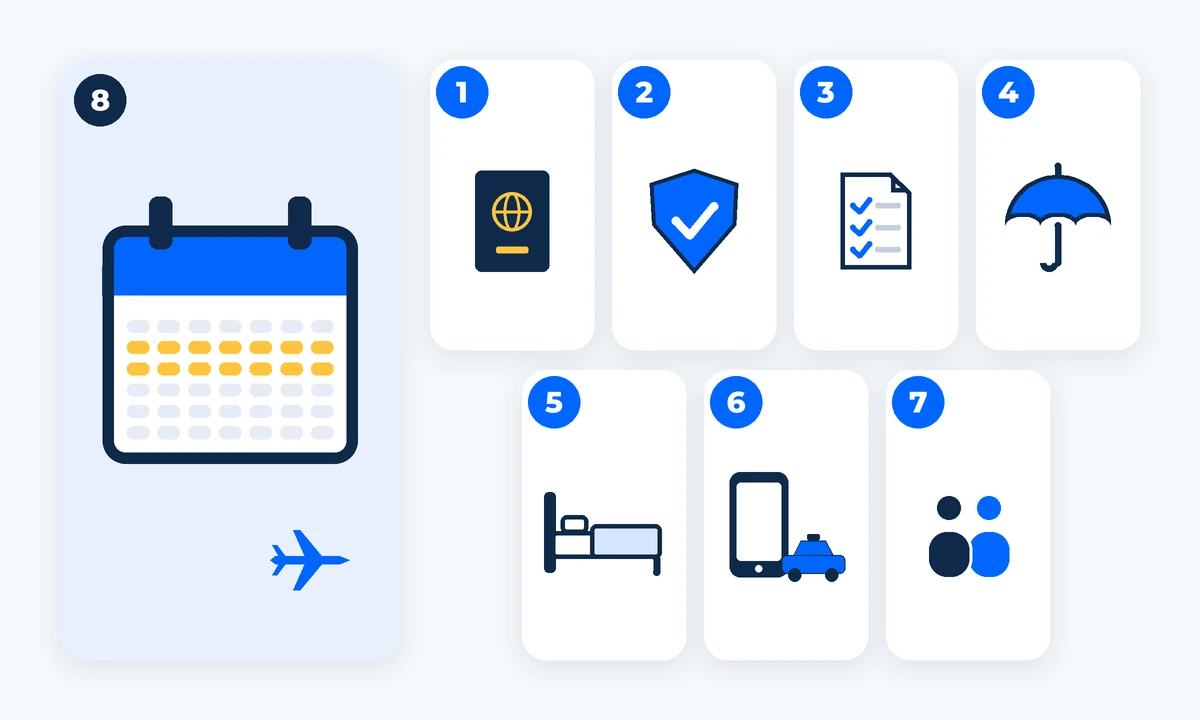
Figure 1. What to prepare before the trip. ① Entry requirements. ② A registered provider. ③ A written treatment plan. ④ Insurance. ⑤ Accommodation. ⑥ Phone data and transport. ⑦ A companion. ⑧ See a travel medicine professional 4–6 weeks before you go.
Start planning several weeks ahead. The US CDC suggests seeing a travel medicine professional 4–6 weeks before your trip (CDC Yellow Book, accessed October 2026). This is a doctor or nurse who gives health advice for travel. Talk to them about your health and the procedure.
More details are in our pre-departure checklist.
The CDC gives these examples (CDC Yellow Book, accessed October 2026):
| Type of procedure | CDC guidance on flying |
|---|---|
| Chest or abdominal (belly) surgery | Do not fly for 10 days |
| Facial cosmetic procedures | Cites a wait of 7–10 days |
Your own doctor may give a different date. Always follow your doctor’s advice. For more examples, see typical recovery time by procedure.
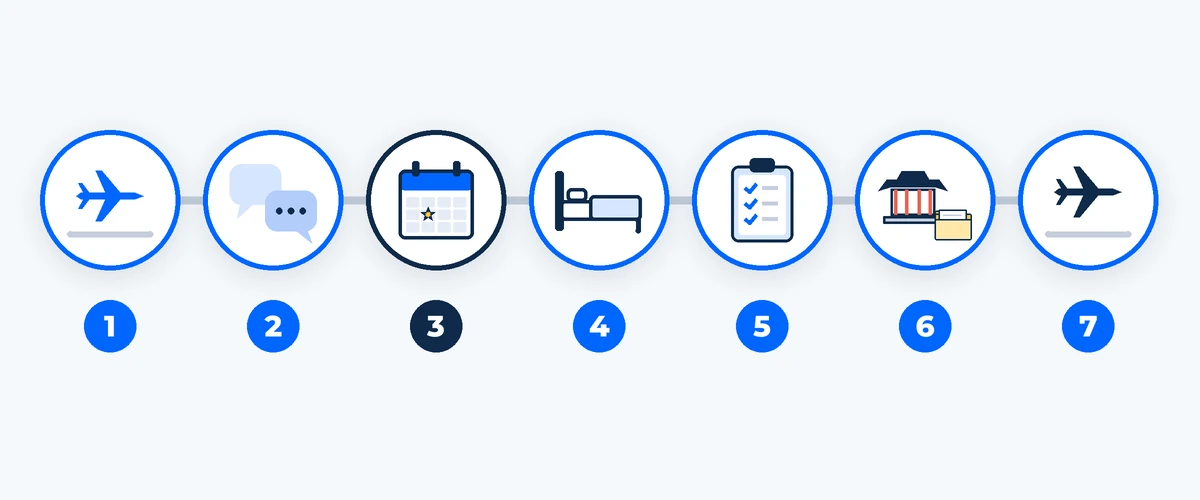
Figure 2. A sample 1-week plan. ① Day 1: arrive and rest. ② Day 2: consultation. ③ Day 3: treatment or checkup. ④ Day 4: rest. ⑤ Day 5: follow-up if needed. ⑥ Day 6: gentle sightseeing and collect records. ⑦ Day 7: fly home if cleared.
This kind of schedule may suit minor, non-surgical treatments or a health checkup, if your treatment team agrees. It is often too short for surgery.
| Day | Plan |
|---|---|
| Day 1 | Arrive. Airport transfer, check in, buy a transit card, rest. Avoid alcohol and late nights. |
| Day 2 | In-person consultation. Review the quote and plan. Do not feel pressured to decide on the spot. |
| Day 3 | Treatment or checkup day (if you are comfortable with the plan). Rest afterwards. |
| Day 4 | Rest day. Short walk near your accommodation, soft food, follow aftercare instructions. |
| Day 5 | Follow-up check if needed. Light, indoor activity in the afternoon if you feel well. |
| Day 6 | Gentle sightseeing (see below). Collect records, receipts and itemized bills. |
| Day 7 | Final check if advised. Fly home only if your doctor has said it is OK. |
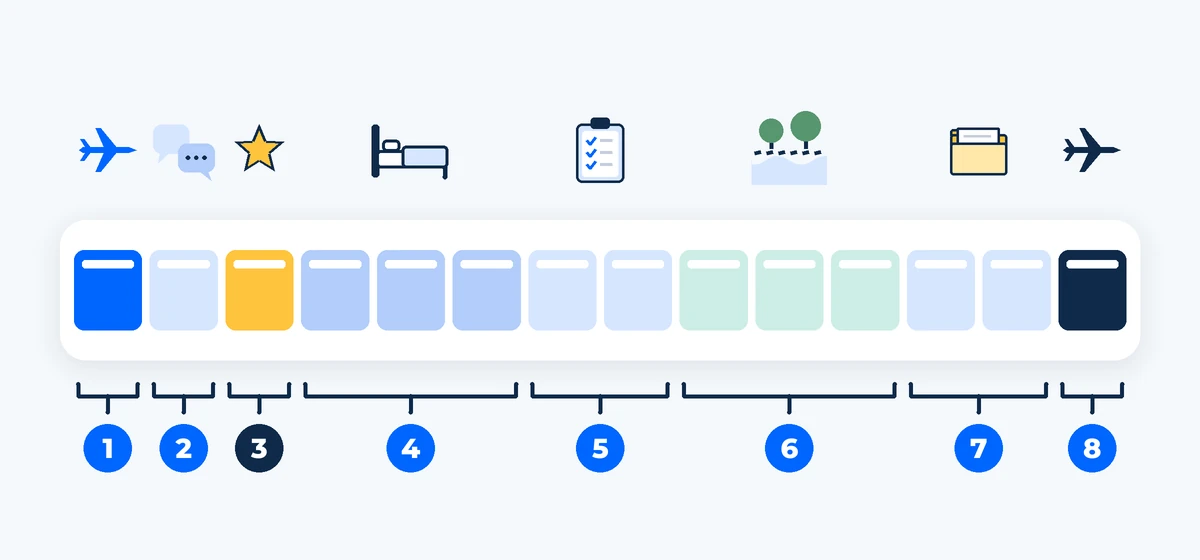
Figure 3. A sample 2-week plan. ① Day 1: arrive. ② Day 2: consultation and tests. ③ Day 3: procedure day. ④ Days 4–6: main rest. ⑤ Days 7–8: follow-up visit. ⑥ Days 9–11: light activities. ⑦ Days 12–13: final follow-up and records. ⑧ Day 14: fly home if cleared.
This kind of schedule may suit procedures that need follow-up visits or stitch removal. Some surgeries need even longer. Ask your doctor.
| Days | Plan |
|---|---|
| Day 1 | Arrive, settle in, rest. |
| Day 2 | Consultation and pre-procedure tests. Confirm the full plan, costs and follow-up dates in writing. |
| Day 3 | Procedure day. A companion or coordinator can help you get back to your accommodation. |
| Days 4–6 | Main rest period. Stay close to your accommodation. Eat soft, mild food. Attend any checkups. |
| Days 7–8 | Follow-up visit (for example, dressing change or stitch removal, if planned). Short walks. |
| Days 9–11 | Light activities if you feel well and your doctor agrees. Keep resting in between. |
| Days 12–13 | Final follow-up. Ask for your medical records in English, aftercare instructions, and contact details for questions. |
| Day 14 | Fly home if your doctor has cleared you to fly. |
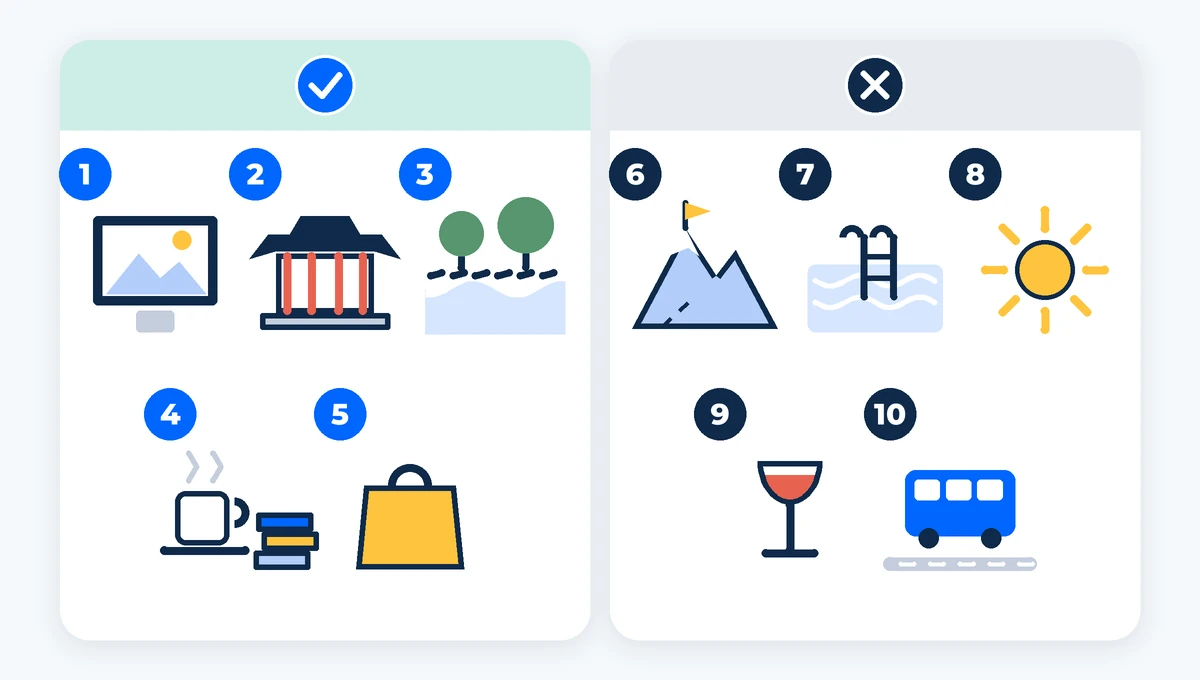
Figure 4. What to do and what to avoid while healing. ① Museums and galleries. ② Palaces and gardens. ③ Short, flat riverside walks. ④ Cafés and bookshops. ⑤ Department stores and underground malls. ⑥ Avoid strenuous exercise and hiking. ⑦ Avoid pools, the sea, saunas and bathhouses. ⑧ Avoid strong sun. ⑨ Avoid alcohol. ⑩ Avoid long day trips by bus.
When you feel well and your doctor agrees, gentle activities can make the stay more enjoyable. Choose things that are calm, short and close to your accommodation.
| Usually easier | Usually best avoided while healing (based on CDC advice) |
|---|---|
| Museums and galleries – indoors, heated or air-conditioned, with places to sit | Strenuous exercise, hiking and long walking tours |
| Palaces and gardens – walk slowly, take breaks, wear a hat, avoid strong sun | Swimming pools, the sea, saunas and public bathhouses (jjimjilbang) |
| Short, flat stream-side or riverside walks in the city | Sunbathing or long periods in strong sun |
| Cafés and bookshops – good for resting between short outings | Alcohol, including at night markets and bars |
| Department stores or underground malls – indoors, with lifts and restrooms | Long day trips by bus |
Is one week enough for a medical trip to Korea? It may be enough for minor, non-surgical treatments or a health checkup, if your treatment team agrees. It is often too short for surgery.
When can I fly home after surgery? Follow your doctor’s advice. As examples, the CDC says not to fly for 10 days after chest or abdominal surgery and cites 7–10 days for facial cosmetic procedures (CDC Yellow Book, accessed October 2026).
Should I arrive the day before my consultation? Yes, if you can. A buffer day helps with jet lag and gives you time to settle in.
Can I go sightseeing while I recover? Gentle, short, indoor or flat activities may be fine if your doctor agrees. Avoid saunas, swimming, strong sun, alcohol and long tours.
Do I need someone to travel with me? It is a good idea, especially for surgery or sedation. A companion can help you get back to your accommodation.
What documents should I bring home? Your medical records, test results and prescriptions in English, plus all receipts and itemized bills.
If you’d like help planning, you can talk to a coordinator.